
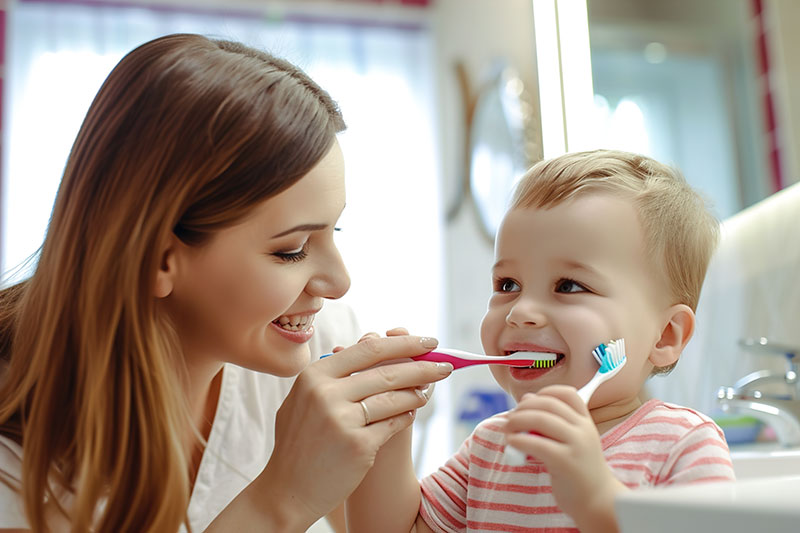
Ben’s Brushing – Children’s Toothbrushing Guide
Keeping children’s teeth clean is simple when a few key habits are followed every day. Good brushing removes plaque — a thin layer of bacteria and food particles that sticks to the teeth and can cause tooth decay and gum problems if it isn’t cleaned away.
1. Brush Twice a Day
-
Brush for 2 minutes, twice daily.
-
Brush once in the morning and once at night before bed.
-
Using a timer or a toothbrush with a built-in timer can help make sure the full two minutes are completed.
2. Use Fluoride Toothpaste
-
Always use fluoride toothpaste, as fluoride helps protect teeth from decay.
-
Under 3 years: use a small smear of fluoride toothpaste.
-
Over 3 years: use a pea-sized amount.
3. Spit Out – Don’t Rinse
-
After brushing, spit out the toothpaste but do not rinse with water.
-
This allows the fluoride to stay on the teeth longer and continue protecting them.
4. Brush Every Tooth Surface
-
Make sure to brush all surfaces of all teeth:
-
the front
-
the back
-
the biting surfaces
-
-
Be careful not to miss any areas.
-
Brushing in the same order each time helps make sure every tooth is cleaned.
5. Clean Along the Gum Line
-
Hold the toothbrush at a slight angle toward the gums.
-
This helps clean the gum margin, where plaque often collects.
6. Choosing a Toothbrush
-
Manual or electric toothbrushes are both effective.
-
The most important thing is that the bristles are soft and not worn out.
-
Replace toothbrushes or brush heads every few months, or sooner if the bristles become frayed.
7. Mouthwash (Optional)
-
Mouthwash is not essential for children.
-
If used, choose a fluoride mouthwash.
-
Use it at a different time from brushing (for example, at lunchtime), so the fluoride from toothpaste is not washed away.
8. Supervision for Younger Children
-
Children should have their toothbrushing supervised by an adult until they have the manual skill to tie their shoelaces, usually around 7–8 years old.
0 Comments